Openality publishes its inclusive UX framework
Eight months ago, we started with a question: what would VR look like if it were designed around the people it currently excludes?
Today, with continued investment from Media Cymru's Development programme, we're publishing the answer - or at least the first substantial part of it.
The Openality Inclusive UX Framework
The Openality Inclusive UX Framework is now live at docs.openality.com. It's a comprehensive, openly documented set of design principles, interaction patterns, and technical guidelines for building VR experiences that genuinely work for neurodivergent and physically disabled users.
The framework is built around three core barriers that our research consistently identified:
Cognitive load, sequencing and predictability - the ways that unpredictable interfaces, complex navigation, and information overload create barriers for users with cognitive differences. The framework defines patterns like Linear Task Segmentation, State-Based Persistence, and Pressure-Free Interaction that address these barriers at the design level.
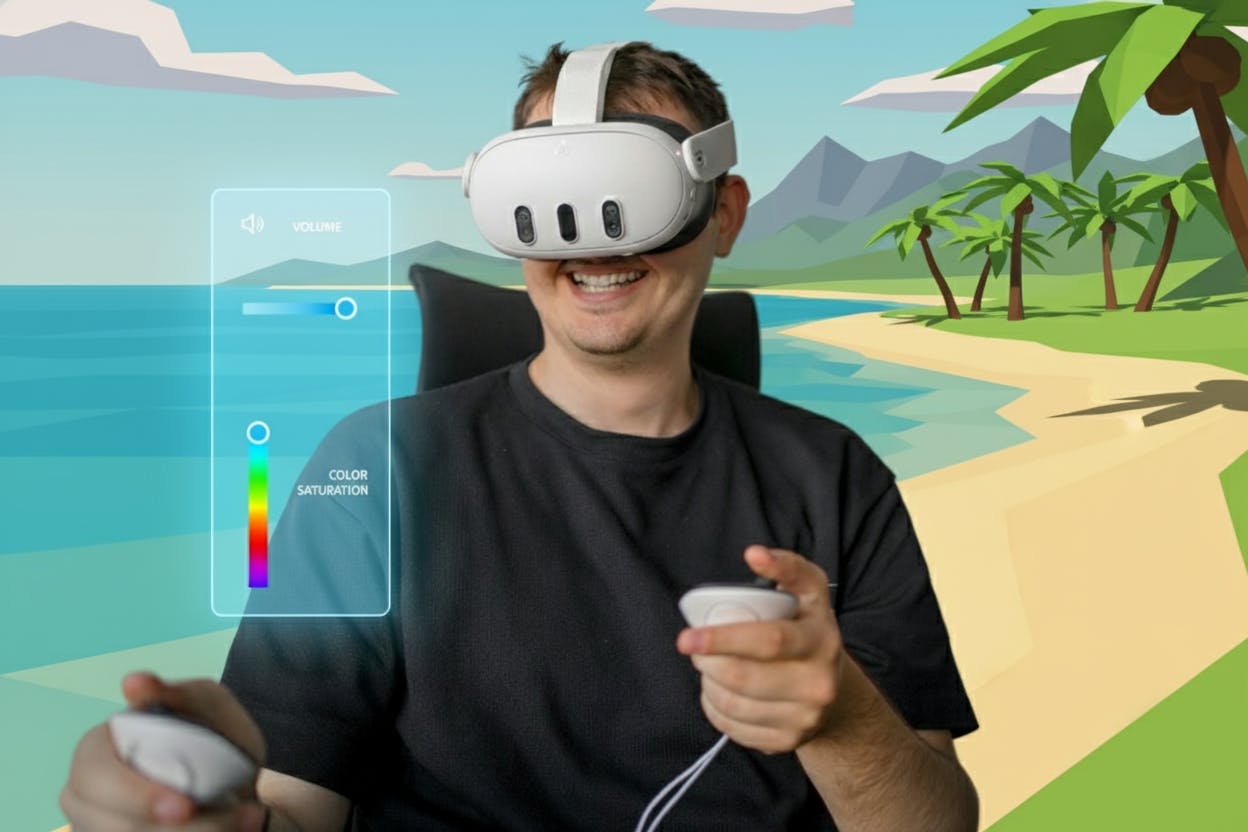
Sensory regulation and environmental control - the absence of meaningful control over audio, visual intensity, and environmental pace. Patterns like the Sensory Dashboard, Gentle Immersion, and Safe Retreat give users and carers the tools they actually need.
Standard controller dependency - the assumption that users can hold and manipulate controllers in conventional ways. Patterns including Single-Arm Autonomy, Gesture Abstraction, and Fatigue Minimisation address this directly.
The framework is free, open, and designed to be useful to any developer working in immersive technology - not just those building for SEN contexts specifically.
Built from research, not assumption
Every pattern in the framework traces back to something we heard at Ysgol Y Deri, our SEN school partner in Penarth. Ten-plus hours of interviews with teachers, support staff, and assistive technology specialists gave us the raw material. The framework is what happens when you take that material seriously.
One teacher described the need plainly: going to the train station, using the ticket machine, navigating the platform - these are exactly the kinds of real-world situations her students most urgently need to rehearse. That observation is one of dozens that shaped what Openality is becoming.
What we're building next
With Media Cymru's continued support, we're now moving from framework to experience. Openality: Rail Journey is the first experience built to the framework - a VR preparation tool for neurodivergent passengers that isolates and familiarises users with the specific sensory moments most likely to cause distress on a rail journey.
We're also expanding our school partnerships and continuing to develop the platform infrastructure that will eventually allow third-party developers to publish their own inclusive VR experiences through Openality.
The framework is the foundation. The work is just beginning.